
Biometric Access Control: Why Smart Credentials and Fingerprint Systems Are Becoming Standard
It is a long established fact that access control systems contribute to a more effective security system. They enable a business to manage people better and provide a robust solution for checking the credentials of authorised personnel. However, biometric access control has arrived to offer a smart solution with enhanced security features and even more convenience. It also provides a robust alternative to traditional access methods, such as using keys, cards and fobs.
What is biometric access control?
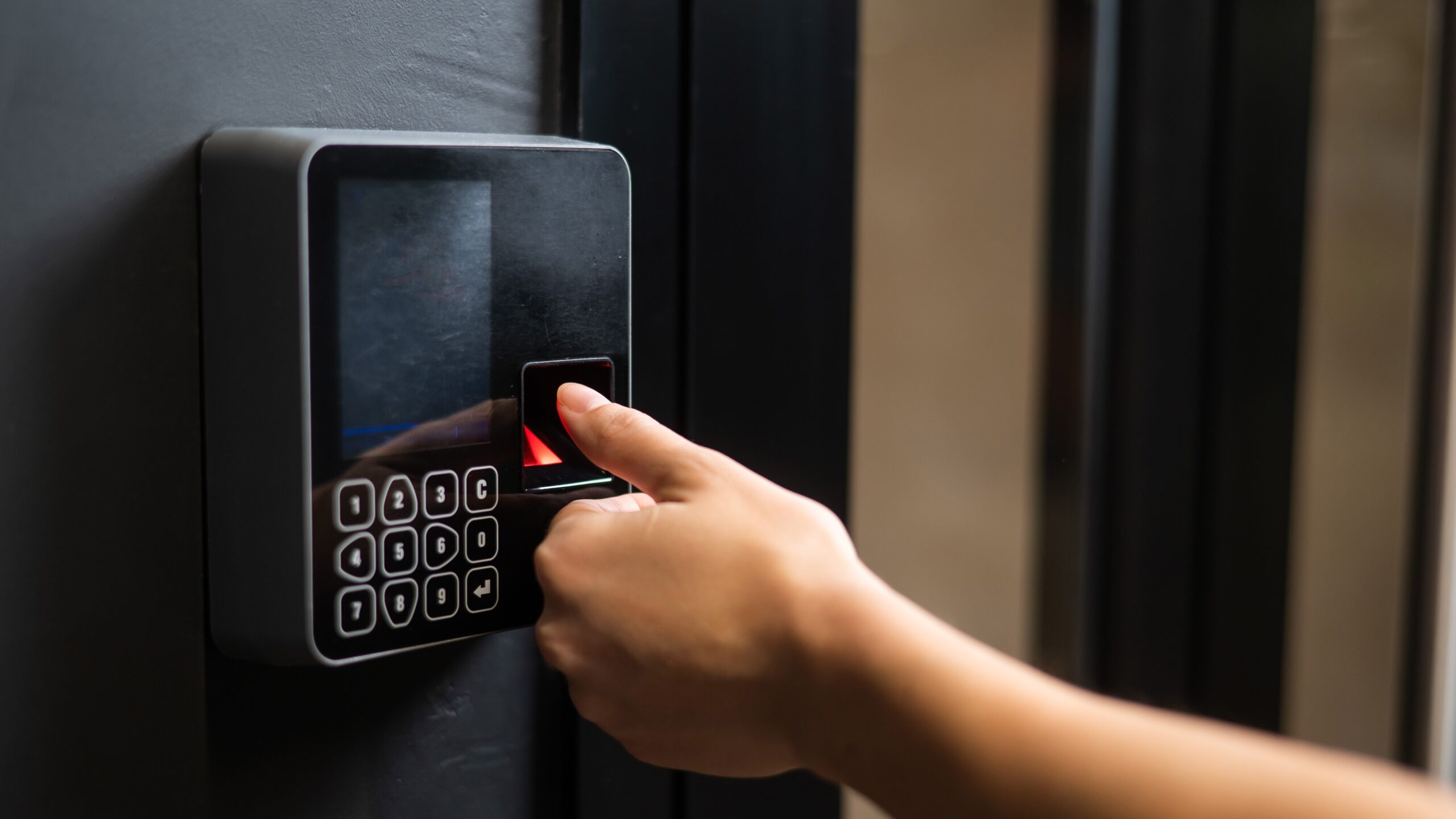
Biometric access control is a method of using a person’s biometric features to carry their credentials as authorised personnel. A person can therefore use their biometric features as a means of gaining access to a building, and for exiting a building. Common methods of using biometric features include fingerprint scans, iris or retina scans and facial recognition scans. These all use a sensor to read a person’s biometric features and grant access based on the recorded details held on a database, with which they should match.
Other smart solutions also exist, such as using a smartphone with an integral app installed. This would use NFC or Bluetooth protocols to carry a person’s credentials, and means people can simply flash their smartphone at a sensor on the access control system to gain authorised entry to a building.
The limitations of traditional access control methods
Until biometric access control arrived as an alternative means of carrying a person’s credentials, access control systems used physical means of entry, such as a card bearing a barcode or containing a chip, or a key fob. These worked effectively but as a physical item they could be lost, stolen or forgotten, or they could be copied and duplicated. This presents a security risk and requires additional administration to issue new cards or fobs, or to change the security controls in place to prevent unauthorised access.
An alternative method was using a keypad to input a unique four-digit code. Again, this worked effectively but was also open to fraud, if the code was shared to unauthorised people, while it was also possible to forget the code or input it incorrectly. This process could become slow and cumbersome in high traffic situations, while it could also be an administrative burden if new codes had to be set-up or re-issued. Video screens and voice controls are also used as a means of entry with access control, but these are systems that are required to be physically manned, while all the other systems are essentially contactless and enable entry on a 24/7 basis.
The benefits of biometric access control and smart credentials
There are several benefits to using biometric access control and smart credentials, compared to physical access control and issuing unique four-digit codes.
- Better security – Essentially there is a lower risk of unauthorised entry if the system uses biometric access control. Biometric features are unique to you and can’t be stolen, copied or shared. Moreover, you don’t have to think about remembering them, storing them or looking after them.
- Faster – Scanning a biometric feature is much faster and more convenient than searching for a physical item or inputting a code. This can be critical in high traffic situations or in bad weather.
- Control – Systems using smart credentials are more programmable and can be flexible to your needs. This means you can set them up to enable access between certain times, or to restrict access at certain times, making them more customisable to your business operations.
- Contactless – Although some traditional methods were also contactless, flashing a biometric feature is faster and more hygienic than inputting a code. Biometric access control became very popular during the pandemic because it reduced the number of physical touchpoints, and also made the access process faster so that people weren’t gathered in close proximity longer than necessary.
- Integration – IT systems enable biometric access control to be linked to other smart systems, meaning you can make access control compatible with security alarms and CCTV systems, while it can also work with your human resources systems to monitor attendance and punctuality, alongside providing important health and safety information.
- Scalable – In high-risk areas it is possible to use biometric features in a two-step verification process without too much administrative work. You could present a biometric feature alongside inputting a four-digit code, for example, or present two biometric features separately, in areas where a higher level of security is required.
- Management – Using biometric access control is much easier to manage as there are no physical items to issue, monitor, retrieve or re-issue. Having to track cards and fobs can be an administrative burden, particularly when there has been a security breach. And even if an employee leaves the company there is no requirement to retrieve their access control credentials, and their biometric features can simply be blocked from being granted access in the system.
Smart access control with Apardion
At Apardion we understand that every business has its own characteristics and circumstances, and therefore requires a bespoke security solution in order for it to be effective. We can work with you to design an effective access control solution using smart credentials and biometric features. This will improve your security and deliver a raft of practical benefits to make your operations effective and efficient, so contact our team at Apardion today.